


The Professional Women Astronomer in the U.S
- Aug 31, 2015
- 2 min read
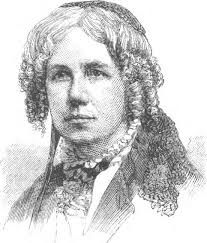
Maria Salmon Mitchell was born in Massachusetts. Her family believed in education, and offered the same equality to men and women. Maria’s father built his own school, where Maria attended and also became a teaching assistant. Out of school, he also taught her how to use a telescope and at age twelve, she helped him calculate the exact timing of annular eclipse.
On October 1, 1847, a 28-year-old Mitchell, while scanning the skies with her telescope atop the roof of her father's place of business, the Pacific National Bank on Main Street in Nantucket, a comet. It turned out that she had spotted a new comet, previously uncharted by scientists. The celestial object subsequently became known as "Miss Mitchell's Comet," with the formal title of C/1847 T1.
In recognition of her important discovery, Mitchell was presented with a gold medal by Frederick VI, king of Denmark, who had an amateur interest in astronomy himself. Consequently, Mitchell became the first professional female astronomer in the United States.
The breakthrough brought Mitchell respect and recognition among astronomers and other scientists, and in 1848, she became the first woman to be named to the American Academy of Arts and Sciences. In 1849 she was offered a job by the US Nautical Almanac Office to calculating positions of the planet Venus. Her work has enabled her to travel in Europe and on her return, she was presented with a new telescope bought with money collected by women for the first woman astronomer of the United States. She used it to study sunspots and other astronomical events, and discovered that sunspots are whirling vertical cavities. In 1850, she was elected to the American Association for the Advancement of Science.
In 1856, Mitchell left the Atheneum to travel the United States and abroad, and in 1865, she took a job as professor of astronomy at Vassar College in upstate New York. She was also named as Director of the Vassar College Observatory, where she was permitted to use the 12 inch telescope, the third largest in the US at the time. Mitchell and her students continuously tracked and photographed sunspots. In 1882, they documented Venus traversing the sun, which is one of the rarest planetary alignments known to man, occurring only eight times between 1608 and 2012.

Mitchell was elected to the American Philosophical Society in 1869. Four years later, in 1873, she co-founded the Association for the Advancement of Women, serving as the organization's president for the next three years. In 1873 she attended the first meeting of the Women’s Congress.
According to the National Women's History Museum, Mitchell once stated, "We especially need imagination in science. It is not all mathematics, nor all logic, but it is somewhat beauty and poetry."
She retired in 1888 due to poor health, and after her death in 1889. The Maria Mitchell Observatory in her birth town of Nantucket was named in her honour. The Maria Mitchell foundation was also founded in 1902. She was also inducted into the U.S National Women’s Hall of Fame in 1994 and was the namesake of a World War II Liberty ship the SS Maria Mitchell. She also has the lunar crater, “Mitchell’s Crater” named after her.
Adapted from Bio.
Comments