


The Lady with the Lamp
- Sep 6, 2015
- 3 min read
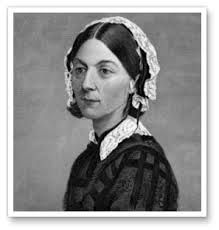
Florence Nightingale was born on May 12, 1820, in Florence, Italy. The Nightingale's affluent British family belonged to elite social circles. Her mother, Frances Nightingale, hailed from a family of merchants and took pride in socializing with people of prominent social standing. But Florence, preferred to avoid being the center of attention whenever possible. Florence's father was William Shore Nightingale, a wealthy landowner. Florence was raised on the family estate at Lea Hurst, where her father provided her with a classical education, including studies in German, French and Italian.
From a very young age, Florence Nightingale was active in philanthropy, ministering to the ill and poor people in the village neighboring her family’s estate. By the time she was 16 years old, it was clear to her that nursing was her calling. She believed it to be her divine purpose.
When Nightingale approached her parents and told them about her ambitions to become a nurse, they were not pleased and forbade her from pursuing nursing. During the Victorian Era, a young lady of Nightingale's social stature was expected to marry a man of means. When Nightingale was 17 years old, she refused a marriage proposal from a "suitable" gentleman, Richard Monckton Milnes as she felt marriage would enslave her in domestic responsibilities.
Determined to pursue her true calling despite her parents' objections, in 1851 she went to Kaiserwerth in Germany to learn. Then in 1853 she was given her first post reorganizing a small hospital in Harvey Street, London the Institution for the Care of Sick Gentlewomen in Distressed Circumstances. Florence Nightingale did an excellent job of reorganizing the hospital.
In March 1854, the Crimean War began when Britain and France declared war on Russia. As a result of her work, Sidney Herbert the Secretary of War invited her to go on a mission to soldiers wounded fighting the Russians. Florence Nightingale sailed with 38 nurses to Turkey on 21 October 1854 and they arrived in November.
Florence found military hospitals were dirty and great numbers of soldiers were dying of diseases. She worked long hours to bring order and cleanliness to the hospitals. They raised 45,000 pounds, a huge sum in those days to help her.
During the next 21 months, Florence worked to improve conditions in the hospital. She and her nurses bathed the soldiers, washed their linens, and fed them more substantial food. She eventually established a separate kitchen with her own money to prepare easily digested food for patients. She secured a source of clean drinking water and improved overall sanitary conditions. The mortality rate declined by 2% because of her efforts. She personally attended to countless men, many on their deathbeds. She made so many endless rounds, carrying a lamp with her in the late hours of the night, that she became known as the “Lady with the Lamp.”

In the beginning, the nurses were not even allowed to treat the dying men, they were only instructed to clean the hospital. But, eventually the number of casualties became so overwhelming that the doctors asked Florence and her team of nurses to help.
By the time she returned home in 1856 she had become a national heroine and was decorated with numerous awards including one from Queen Victoria. Upon her return, she was commissioned to investigate the living conditions of British soldiers in peacetime. In 1858 she published her findings as Notes on Matters Affecting the Health, Efficiency and Hospital Administration of the British Army.
After the war, she didn’t really appreciate the fame, but continued to work for the improvement of hospital conditions, writing to influential people encouraging them to improve hygiene standards in hospitals. She also founded a training school for nurses at St Thomas’s hospital, London in 1860. Florence too, raised the standards of nursing greatly.
In old age Florence Nightingale suffered from ill health and she went blind. She was awarded the Order of Merit in 1907. Florence Nightingale died at the age of 90 in 1910.
Comments